Before the Words Even Hit: Why Anime Composers Are the Real Storytellers
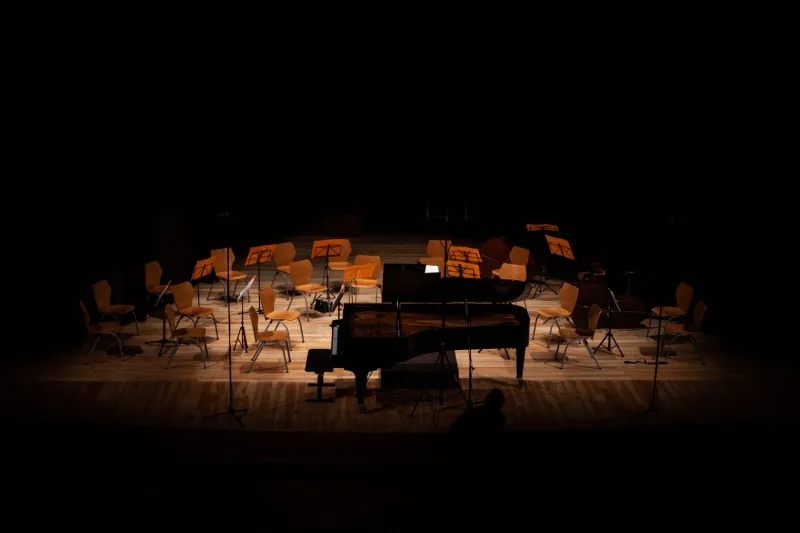
There's a moment in Your Lie in April where the piano swells before Kousei even touches the keys. Nothing has been said. No dramatic confession, no tearful monologue. Just Masaru Yokoyama's score filling the silence like water finding every crack. And somehow, you're already crying.
That's not an accident. That's craft.
Anime has quietly developed one of the most emotionally intelligent scoring traditions in modern storytelling — and for a long time, Western audiences wrote it off as background noise to cartoons. That's changing fast. Spotify playlists dedicated to anime OSTs are pulling millions of streams. TikTok edits built around Attack on Titan's orchestral drops go viral weekly. People are discovering that these soundtracks aren't just accompaniment — they're the actual emotional architecture of the stories they love.
So what makes anime music hit so differently? Let's dig in.
The Composer as Co-Writer
In Hollywood, film scoring is often a late-stage process. The director cuts the film, then brings in a composer to underscore what's already been built. It's collaborative, sure, but the music is frequently reactive — filling in emotional blanks rather than driving the narrative.
In anime production, the relationship between score and story is often much tighter. Composers like Yoko Shimomura, Hiroyuki Sawano, and Yoshihisa Hirano work closely with directors from early in production, developing musical motifs that grow and evolve alongside characters. The music isn't just responding to the story. In many cases, it's shaping how the story gets told.
Hiroyuki Sawano's work on Attack on Titan is a perfect case study. His signature blend of operatic vocals, distorted bass, and full orchestration doesn't just accompany Eren's journey — it defines the series' emotional register. When that iconic choir kicks in during a Titan breakthrough scene, you're not just watching action. You're feeling the weight of a civilization fighting for survival. The music tells you what's at stake before a single line of dialogue explains it.
Silence, Space, and the Japanese Aesthetic
One of the most underappreciated tools in anime scoring is restraint. Japanese musical aesthetics are deeply influenced by concepts like ma — the meaningful use of negative space, of pause and silence as active elements rather than absences. Western scoring tends to fill every emotional beat. Anime composers often know when to pull back and let the quiet breathe.
Listen to Joe Hisaishi's work for Studio Ghibli and you'll feel this immediately. The score for Spirited Away is lush in places, but Hisaishi consistently leaves room for ambient sound — wind, water, the creak of a bathhouse — to carry emotional weight. It mirrors the film's visual philosophy: nothing is over-explained, and the audience is trusted to feel what isn't shown.
This approach creates a different kind of emotional engagement. Rather than telling you how to feel through wall-to-wall orchestration, these scores invite you into the feeling. There's a reason Ghibli soundtracks function so well as study music or background listening — they're designed to coexist with your own inner world, not dominate it.
Genre as Emotional Vocabulary
What's also fascinating about anime music is how it uses genre-blending as emotional shorthand. A shonen battle series might drop into jazz fusion during a tense standoff — Cowboy Bebop basically built its entire identity on this — while a quiet slice-of-life show might borrow from classical chamber music to elevate an otherwise mundane afternoon into something almost sacred.
Yoko Kanno, arguably one of the most versatile composers working in anime, treats genre as a toolkit rather than a constraint. Her work on Cowboy Bebop alone spans bebop jazz, blues, opera, flamenco, and heavy rock — sometimes within a single episode. It's not chaotic. It's deeply intentional. Each musical style carries cultural and emotional associations that Kanno weaponizes to expand the storytelling beyond what the animation alone could achieve.
This genre fluency is something Western TV scoring rarely attempts at the same scale. Most American prestige dramas pick a sonic identity and stay inside it. Anime composers are more likely to treat the full spectrum of global music as fair game.
From Background to Billboard: The OST as Standalone Art
Here's where things get interesting for American fans specifically. Anime OSTs are increasingly being consumed completely outside of their source material. Albums like the Demon Slayer soundtrack by Go Shiina and Yuki Kajiura, or Sawano's Attack on Titan compilations, are charting on platforms traditionally dominated by pop and hip-hop. Fans who haven't seen a single episode are streaming these records as pure listening experiences.
This isn't really happening with, say, the Grey's Anatomy score or the Succession theme (iconic as that piano piece is). Western TV music tends to remain tethered to its show. Anime OSTs are developing independent fan bases, concert tours, and critical reappraisal as serious musical works.
Part of that is accessibility — streaming made it easy. But a bigger part is that anime composers often build scores with enough melodic identity and emotional range that they function as complete artistic statements on their own. You don't need the visuals. The music tells you everything.
Why This Matters for How We Watch
Understanding the intentionality behind anime scoring changes the viewing experience in a real way. When you know that a recurring motif in Fullmetal Alchemist: Brotherhood is being deliberately transformed — from hopeful to broken to something almost transcendent — across the series' arc, you start listening differently. You catch things you missed. You feel the storytelling working on multiple levels simultaneously.
And that's kind of the whole point of Chisou-En's corner of the internet. Japanese storytelling, whether in animation, music, or garden design, tends to trust its audience. It plants things and lets them grow. Anime composers are doing the same thing — seeding emotional information early, letting it bloom slowly, and trusting that you'll feel the harvest when it comes.
Next time an episode wrecks you before anyone's said a word, pay attention to what's playing. Somebody spent months making sure that moment would land exactly that way. And they nailed it.