The Space Between: How 'Ma' Gives Anime Its Emotional Breathing Room
Picture this: a character just got devastating news. In a typical Western animated series, the next beat usually arrives fast — a reaction shot, a musical sting, maybe a cut to another character's face. The story keeps moving. But in anime, that same moment might linger. The camera holds on a window. Rain streaks down the glass. Nothing happens for three, four, maybe six full seconds. And somehow, you feel it more.
That's not an accident. That's ma.
What 'Ma' Actually Means
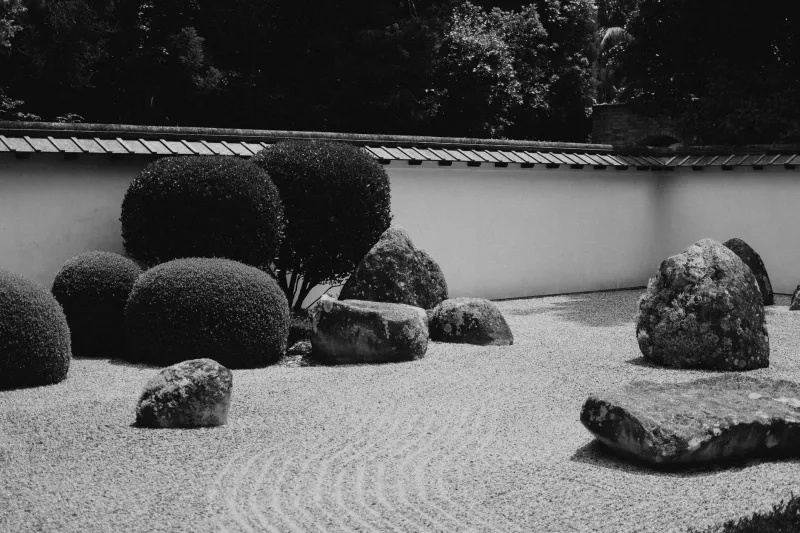
The word ma (間) is one of those Japanese concepts that resists a clean English translation, which is kind of the point. It roughly covers the idea of negative space — not just in a visual sense, but in time, in sound, in emotion. Think of it as the gap between two notes in music that makes both notes matter more. Or the empty corner of a room that makes the furniture feel intentional. Ma is the meaningful nothing.
In traditional Japanese art forms — from ikebana flower arrangement to Noh theater to architecture — ma is treated as an active element, not an absence. The space isn't where something is missing. It's where something is happening. That philosophy runs so deep in Japanese culture that it eventually found its way into anime, shaping how directors frame shots, pace scenes, and build emotional tension in ways that feel almost invisible until you start looking for them.
The Western Instinct to Fill the Frame
American animation, broadly speaking, tends toward fullness. Think about the visual energy in something like a Disney or Pixar feature — every frame is dense with color, movement, and detail. Characters emote broadly. Backgrounds are rich and layered. The soundtrack rarely goes quiet. This isn't a flaw; it reflects a storytelling tradition that values momentum and expressiveness, and it's produced some genuinely stunning work.
But there's a trade-off. When everything is equally loud, quietness loses its power. When every frame is packed, stillness feels like a technical pause rather than an intentional choice. Western animation, even at its most emotionally sophisticated, often struggles to let a moment simply breathe.
Anime doesn't have that problem — because ma gives directors permission to trust the audience with emptiness.
Reading the Silence in Iconic Scenes
Once you start noticing ma in anime, it's everywhere. Take Your Lie in April — a series that's basically a masterclass in emotional negative space. There are moments where the show cuts away from a performance entirely, letting you sit with the music and a still image of the sky or an empty auditorium seat. The absence of the character's face in those moments forces you to feel what the music is doing, rather than being told how to feel by a reaction shot.
Or consider Neon Genesis Evangelion, which weaponized ma in ways that genuinely unsettled Western audiences when they first encountered it. Famously sparse scenes — characters staring, trains moving, long holds on empty rooms — read as avant-garde or even broken to viewers raised on faster pacing. But those gaps weren't budget-saving shortcuts (well, not only that). They were Hideaki Anno using stillness as psychological pressure. The silence wasn't nothing. It was Shinji's internal collapse, rendered in negative space.
Even in lighter fare, ma shows up. Mushishi practically runs on it — whole episodes built around quiet landscapes and unhurried conversation, where the empty forests and fog-covered rivers are as expressive as any character's face. The show never rushes to fill its own silences, and that restraint is what makes it feel genuinely otherworldly.
Why This Changes How You Experience Tension
Here's the thing about ma that makes it so effective as a storytelling tool: it hands the emotional work to the viewer. When a scene slows down and empties out, your brain doesn't go passive — it leans in. You start projecting. You fill the space with your own anxiety, your own hope, your own dread. The director isn't telling you how to feel; they're creating the conditions for you to feel something specific, and then stepping back.
This is actually a more demanding ask of the audience than a fully scored, reaction-shot-heavy scene. It requires trust — trust that the viewer will meet the emptiness halfway. And when it works, the emotional payoff is deeper, because you've participated in creating it.
Compare a tense confrontation scene in a Western animated show to something like the rooftop scene in A Silent Voice. Western animation would likely score the moment heavily, cut between faces, and underline the stakes with music. A Silent Voice slows everything down. The background noise of the city fades. There's wind. There's space. And the weight of what might happen fills every frame precisely because the film refuses to tell you how to carry it.
The Cultural Root of the Difference
This isn't just an aesthetic preference — it reflects something genuinely different about how Japanese and American cultures relate to communication and meaning. American storytelling tends to be explicit. Subtext gets surfaced. Emotions get named. There's a tradition of making sure the audience is never confused about what they're supposed to take away.
Japanese communication, broadly, leans more heavily on haragei — the art of the unspoken, of meaning conveyed through implication and context rather than direct statement. Ma is that principle translated into visual language. What's left out is part of the message. The pause is part of the sentence.
For American fans encountering anime for the first time, this can feel disorienting. A scene that seems to go nowhere might actually be the emotional core of an entire episode. Learning to read ma is, in a real sense, learning a new visual vocabulary.
Learning to Sit With It
The good news is that this vocabulary is learnable — and once you've picked it up, it changes how you watch everything. You start noticing when a director trusts their audience and when they don't. You feel the difference between a scene that earns its silence and one that's just moving fast to avoid it.
If you want to train your eye, start with directors who use ma deliberately and generously: Makoto Shinkai's environmental stillness, Naoko Yamada's quiet character moments, Isao Takahata's unhurried warmth in Only Yesterday. Sit with the slow parts. Don't reach for your phone during the pauses. Let the empty frames do what they're designed to do.
Because in anime, the space between things isn't where the story stops. It's where the story actually lives.