Quietly Seen: How Anime Gets Introverts Right in Ways American TV Almost Never Does
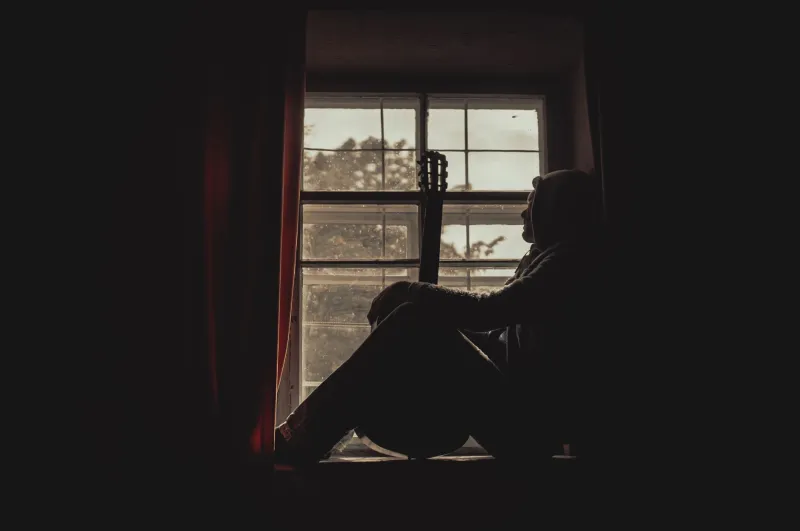
There's a moment in March Comes in Like a Lion where Rei Kiriyama sits alone in his apartment, the city humming outside his window, and the show doesn't treat it like a problem to solve. He's not waiting for a friend to knock. He's not about to have a breakthrough. He's just... there. Existing in his own quiet way. And somehow, that's enough.
If you grew up watching American sitcoms or teen dramas, you know how unusual that is. Western TV has a long, deeply ingrained habit of treating introversion like a phase — something the quirky loner character will eventually grow out of once the right extrovert comes along and drags them to a party. Anime, more often than not, doesn't do that. And for a huge portion of American fans, that difference is exactly why they fell in love with the medium in the first place.
The "Fix the Quiet Kid" Problem in Western Storytelling
Let's be honest about the pattern. American TV loves a transformation arc. The shy girl gets a makeover and finds her voice. The awkward guy learns to speak up and suddenly has a social life. The introverted genius realizes they've been missing out on human connection all along. These stories aren't always bad — sometimes they're genuinely moving. But they carry an embedded assumption: that quietness is a deficit, and socializing more is the cure.
It's a narrative that a lot of introverted American viewers have grown up internalizing, often uncomfortably. Because here's the thing — most introverts aren't waiting to be saved from themselves. They're not broken. They just experience the world differently, and they're pretty aware of it.
Anime, particularly in the slice-of-life and drama spaces, tends to understand this in a way that feels almost radical by comparison.
Characters Who Are Allowed to Just Be
Take Hitori Bocchi from Bocchi the Rock! — yes, her social anxiety is the engine of the comedy, but the show never frames her personality as something that needs to be dismantled. The goal isn't for Bocchi to become an extrovert. It's for her to find her own path forward, at her own pace, in ways that feel true to who she actually is. Her bandmates don't try to change her. They work around her, with her, because of her. That's a meaningful distinction.
Or consider Shoko Nishimiya in A Silent Voice. Her isolation isn't played as a personality flaw — it's the result of specific, painful circumstances, and the film treats her interiority with enormous care. She's not a problem for the story to solve. She's a full person navigating a world that hasn't always made space for her.
Even in a show like My Teen Romantic Comedy SNAFU, Hachiman Hikigaya's deliberate withdrawal from social performance is presented as a coherent worldview, not a cry for help. You might disagree with his philosophy — the show certainly interrogates it — but it never asks you to dismiss him as simply broken or immature.
These characters feel real because they're written with the assumption that introverted people have already done a lot of thinking about who they are. They're not waiting for the audience to figure them out.
Why This Lands So Hard for American Viewers
The US has a particular cultural obsession with extroversion. Think about how we talk about leadership, success, and likability — almost all of it skews toward the outgoing, the assertive, the person who owns the room. School systems reward participation. Workplaces celebrate the loudest voices in meetings. Even social media has turned self-expression into a performance metric.
For introverted Americans — and studies suggest that's somewhere between a third and half of the population — that cultural pressure is constant and exhausting. So when a piece of media shows up and says, hey, you don't have to perform yourself into someone else's comfort zone, the relief is real.
Anime doesn't always do this perfectly, to be clear. There are plenty of shows that fall into the same "loner learns to open up" tropes that dominate Western storytelling. But the medium has a significantly higher concentration of stories that treat quiet, introspective characters as complete rather than incomplete — and that's not an accident.
The Aesthetic of Inner Life
Part of what makes anime so effective at portraying introversion is the visual language it uses to represent internal experience. Inner monologues, abstract emotional sequences, the way a character's face can hold an entire paragraph of thought without saying a word — these tools let anime actually go inside the quiet character's head in a way that live-action TV struggles to replicate.
When Rei in March Comes in Like a Lion spirals into depression, the animation shifts into something almost dreamlike — dark water, drifting shapes, visual metaphors that communicate what he can't (or won't) say out loud. It's not just showing you a sad person. It's showing you what being that person feels like from the inside. That's a fundamentally different kind of empathy.
For introverted viewers who spend a lot of time in their own heads, that interior access is deeply validating. It says: your inner life is rich, complex, and worth depicting. That's not a small thing.
The Community Irony
Here's the paradox that makes this whole conversation interesting: anime about introverted, isolated characters has built one of the most enthusiastic fan communities in American pop culture. Conventions, Discord servers, Reddit threads, fan art — the people who most deeply connect with stories about loneliness and social anxiety have found each other through those very stories.
There's something genuinely beautiful about that. Bocchi the Rock fan groups are full of people who saw themselves in a character too anxious to talk to strangers — and then talked to strangers about it. The shared experience of feeling unseen creates its own kind of visibility.
What Other Media Could Learn
None of this is to say American TV is incapable of writing introverted characters well — shows like Fleabag or BoJack Horseman do extraordinary work with internal experience. But as a general tendency, anime is far more comfortable letting the quiet character stay quiet, letting the loner remain a loner, and asking the audience to sit with that rather than fix it.
For fans navigating their own social pressures — the expectation to network, to be "on," to fill every silence with productivity — that comfort is more than just entertainment. It's a kind of permission.
Permission to be seen without having to perform. Permission to be enough, exactly as you are.
Anime gets that. And for a lot of American viewers, it's the first time anything ever really did.