Less Is the Whole Point: How Anime's Quiet Moments Outmuscle Hollywood's Loudest Scenes
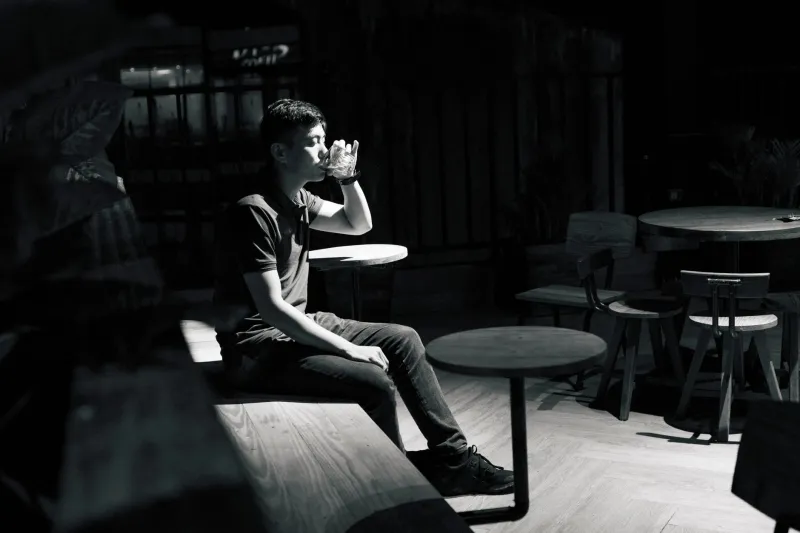
There's a scene near the end of Your Lie in April where Kousei sits at a piano bench, alone, and the camera just... stays there. No swelling orchestra cue timed to hit your chest like a freight train. No slow-motion tears rendered in 4K. Just a boy, a bench, and the particular kind of silence that comes after something irreplaceable is gone. Half the people who've watched that scene describe it as one of the most devastating moments they've ever experienced in any medium — film, TV, books, anything.
Hollywood spent roughly $300 million making Avengers: Endgame. That scene in Your Lie in April probably cost a fraction of a single second of that film's battle sequence. And yet a lot of fans will tell you the anime hit harder.
That's not a coincidence. That's a philosophy.
The Amplification Reflex
American blockbuster filmmaking has developed what you could call an amplification reflex — the instinct to make every important moment bigger. Grief? Score it with strings. Triumph? Cue the horns and cut to a crowd cheering. A villain's defeat? Blow something up. The logic isn't cynical; it's almost generous. Studios want you to feel something, and they've decided that more stimulus equals more feeling.
The problem is that your brain adapts. When every scene is engineered for maximum emotional throughput, the baseline rises. You start needing more to feel the same thing. It's the cinematic equivalent of turning the volume up so high that you eventually can't tell the difference between loud and louder.
Anime, particularly the kind rooted in manga storytelling traditions, tends to operate from the opposite assumption. If you want someone to feel something deeply, you reduce the stimulus. You create space. You let the audience's imagination and emotional memory do the work that no CGI budget ever actually can.
What Restraint Actually Does to Your Brain
There's a reason this works neurologically, and it's not complicated. When a scene gives you everything — the music, the close-up, the reaction shot, the slow motion — your brain is essentially a passenger. You're being told how to feel and at what intensity. It can be effective, but it's also effortless in a way that doesn't stick.
When a scene withholds, when it shows you a character's back instead of their face, or cuts to an empty room instead of a crying close-up, your brain kicks into gear. You fill in the gap. You project your own experience of loss or longing or joy onto that empty space. The emotion that lands isn't just the story's — it's partly yours. That's why it stays with you.
Anime directors like Makoto Shinkai and Naoko Yamada have talked about this instinct in interviews, describing it as a form of respect for the audience. You're not spoon-feeding a reaction. You're trusting people to meet the story halfway.
Specific Moments That Prove the Point
Think about the rain scene in A Silent Voice where Shoya and Shoko stand on a bridge and the film simply lets them exist in the same frame without forcing a resolution. Or the way Violet Evergarden handles its most emotional reveals not with dramatic confrontations but with letters — words on paper, read quietly, often alone.
Or go further back: the ending of Grave of the Fireflies, which doesn't build to a climax so much as it exhales into one. There's no villain to defeat, no twist to resolve. Just two kids and the weight of everything that didn't have to happen. The restraint isn't just stylistic — it's moral. The film refuses to let spectacle sanitize what it's actually saying.
Contrast that with the way American war films tend to handle similar subject matter. Even the genuinely great ones often feel the need to punctuate tragedy with something cinematically big — a heroic sacrifice scored for maximum impact, a final image designed to be iconic. The intention is respect, but the execution can accidentally aestheticize what it means to mourn.
It's Not That Hollywood Can't Do Subtle
To be fair, this isn't a blanket indictment of American filmmaking. Moonlight does restraint as well as almost anything. So does Manchester by the Sea, which famously refuses to let its most devastating scene be dramatic at all — it happens in a parking lot, mid-argument, almost accidentally. American indie cinema and prestige TV have a long tradition of exactly this kind of tonal control.
But those films exist somewhat against the grain of the dominant commercial model. In anime, the restraint isn't countercultural — it's structural. It's baked into the pacing traditions inherited from manga, where a single panel of negative space carries as much narrative weight as a page of action. It's reinforced by production realities that require animators to be intentional about every frame rather than defaulting to spectacle as a safety net.
The result is a medium where subtlety isn't a stylistic choice so much as a native language.
What This Says About Audience Respect
There's something worth sitting with here beyond the technical stuff. The choice to scale back — to trust silence, to let a moment land without underlining it three times — implies a belief that the audience is capable of handling complexity without being guided through it.
Hollywood's amplification reflex, for all its good intentions, sometimes reads as a hedge. A way of making sure nobody misses the point. Anime's restraint reads as confidence. It says: you've been paying attention, you understand this character, you know what this moment means — so we don't need to tell you.
For international fans who came to anime from a diet of American blockbusters, that shift in register can feel almost disorienting at first. Where's the payoff? Why isn't the music swelling? And then, somewhere around the third rewatch of a scene you can't stop thinking about, you get it.
The payoff was the quiet. It was always the quiet.
Why It Matters Right Now
In a media landscape where every streaming platform is competing for your attention with increasingly aggressive tactics — louder trailers, bigger set pieces, more — anime's commitment to stillness is starting to look less like a cultural quirk and more like a genuine alternative. A reminder that the most powerful thing a story can do is sometimes just hold still and let you feel it.
You don't need a $200 million budget for that. You need a director who trusts you. And in anime, that trust is practically a tradition.