Eight Million Strangers: What Anime Understands About City Loneliness That American TV Keeps Getting Wrong
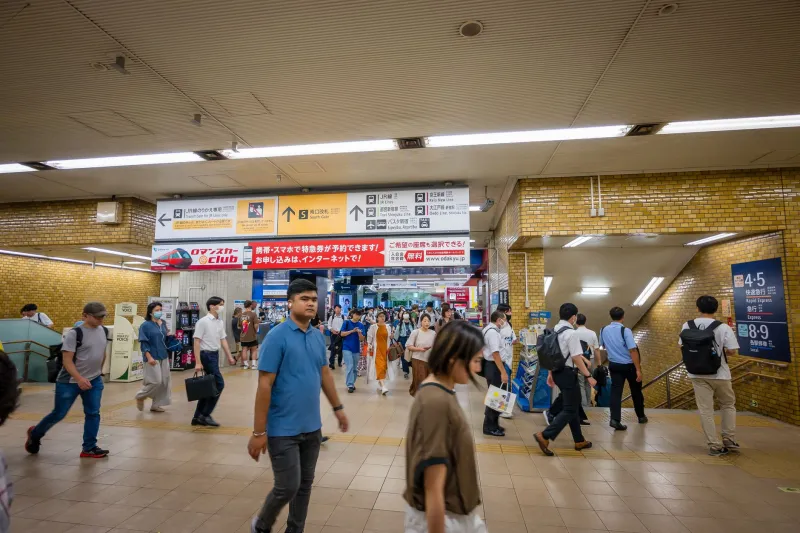
There's a shot that shows up in anime so often it's practically its own genre convention. A character stands on a train platform or at a crosswalk, completely still, while hundreds of people flow past them like water around a stone. Nobody makes eye contact. Nobody slows down. The city is deafeningly full, and the character has never felt more invisible.
If you've ever lived in a big American city — New York, Chicago, LA, Houston — that image probably landed somewhere uncomfortable. Because you've felt it. You just haven't seen it on screen very often, at least not in anything made here.
American city dramas tend to treat urban settings as backdrops for connection. Friends find each other. Careers collide. Romances spark in coffee shops. The city is loud and messy but ultimately generous. Anime, especially the kind set in Tokyo, operates from a very different assumption: the city is where you can disappear completely, and that disappearance is worth examining slowly and honestly.
The Paradox at the Heart of Tokyo Stories
Tokyo is one of the most densely populated metropolitan areas on the planet. Shinjuku Station alone processes over three million passengers on a busy day. And yet anime keeps returning, again and again, to characters who are profoundly, structurally alone inside all of that density.
That's not an accident. It reflects something real about how urban anonymity functions in Japanese culture — and increasingly, in cities everywhere. When you're surrounded by millions of people operating under strict social codes about not intruding on strangers, the crowd doesn't offer comfort. It amplifies your separateness.
Durarara!! captures this beautifully. Mikado Ryuugamine moves to Ikebukuro from a small town specifically because he wants to find something extraordinary in the chaos of the city. What he discovers instead is that the city is full of people who are equally lost, equally performing normalcy, equally hungry for something real beneath the surface noise. The series is technically a supernatural thriller, but its emotional core is about what happens when you realize that being surrounded by millions of people offers zero guarantee of being known by any of them.
Weathering the Distance Between People
Weathering With You takes a slightly different angle. Hodaka runs away to Tokyo and finds the city overwhelming in the most literal sense — gray, wet, indifferent. His connection with Hina doesn't feel like a rom-com meet-cute. It feels like two people grabbing onto each other because the city keeps trying to swallow them whole.
Makoto Shinkai has built an entire career on this specific emotional frequency. His films understand that modern cities create a kind of ambient grief — the grief of proximity without intimacy, of being close to millions of lives you'll never actually touch. Your Name is a love story, yes, but it's also about the specific sadness of living in a Tokyo apartment and feeling like a ghost.
Compare that to how American prestige TV handles urban isolation. Shows like Succession or Severance use New York as a setting for power dynamics or corporate horror. Even Master of None, which does engage with city loneliness more directly, tends to frame it as a problem to be solved through enough socializing and the right romantic partner. The loneliness is a phase. The city is ultimately on your side if you engage with it correctly.
Anime is much less optimistic about that bargain.
The Commuter as Character Study
One of the things anime does that American TV almost never bothers with is treat commuting as emotionally significant time. Not just a transition between scenes, but a space where characters exist in suspension — moving through the city without belonging to any part of it.
The Tatami Galaxy uses Kyoto's urban geography as a kind of psychological maze. Tokyo Godfathers turns a single night of wandering through the city into a complete portrait of people the city has decided not to see. Even something as light as Toradora! understands that the walk to school is where characters are most honest with themselves, before the social performance of the day begins.
This is partly a cultural difference in pacing. American television is generally allergic to scenes that don't advance plot. But it's also a philosophical difference about what cities do to people. Japanese storytelling seems more willing to sit with the idea that urban life creates a kind of ongoing low-grade alienation that doesn't resolve neatly — and that this experience deserves screen time.
Why This Resonates So Hard Right Now
Here's the thing: American audiences are living this. Post-pandemic city life in the US has its own specific flavor of crowded loneliness. Remote work means people can live in dense urban environments and go days without meaningful human contact. Social media creates the illusion of connection while the actual texture of daily life gets quieter and more isolated.
When American anime fans talk about why certain shows hit differently, this is often what they're reaching for. Neon Genesis Evangelion isn't just a mecha show — it's a document of what it feels like to be surrounded by people and still fundamentally unreachable. Serial Experiments Lain was exploring the hollow loneliness of digital connection before most American teenagers had reliable internet access.
These shows weren't predicting the future so much as they were articulating something about urban modernity that Japanese culture had already been grappling with for decades — the way that density and technology can paradoxically increase isolation rather than dissolve it.
The Quiet Radical Act of Showing Loneliness Without Fixing It
Maybe the biggest difference between how anime and American TV handle urban loneliness is what each format thinks the audience needs from the experience.
American TV, broadly speaking, believes you need resolution. The lonely character finds their people. The city reveals its warmth. The story earns its happy ending by proving that connection is possible if you just keep trying.
Anime — particularly the slice-of-life and seinen works that deal most directly with urban isolation — is more willing to let the loneliness just be. Not as a problem, but as a condition. A texture of modern existence that can be witnessed and understood and even, in a strange way, shared.
There's something almost community-building about that. When you watch a show that accurately represents how alone you feel in a crowded place, you're suddenly less alone in that feeling. The screen becomes a mirror, and the mirror says: yes, this is real, you're not broken, millions of people feel exactly this way every single day.
That's not pessimism. In its own quiet way, it might be the most hopeful thing a city story can do.